A pack that goes straight into your tender file.
Not a PDF you have to retype. A working set of documents built for you to price, compare and send out — back within 72 hours.
The scope, in plain English
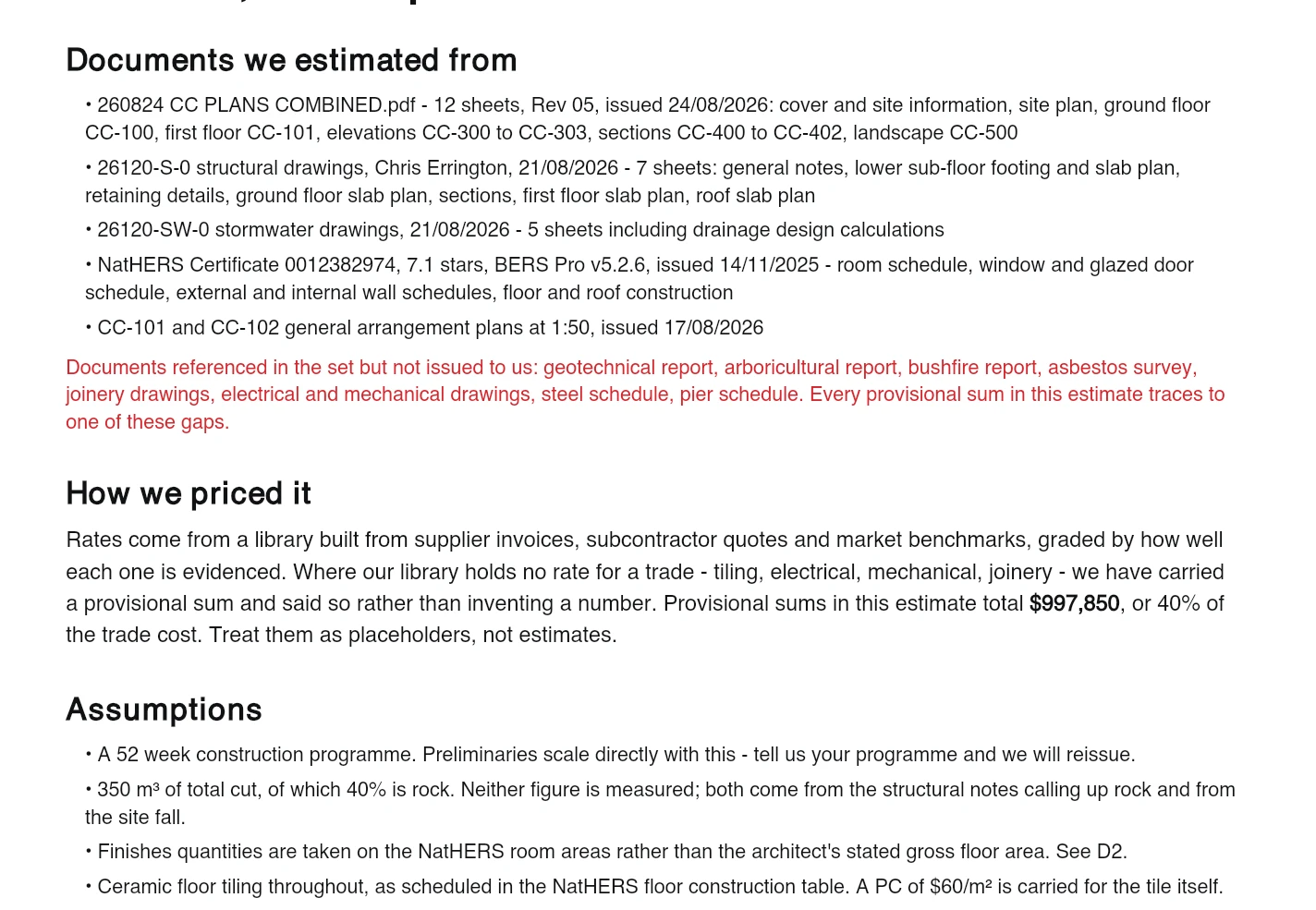
An early page of every pack, straight after the summary, is the job as the documents actually state it — what is being demolished, what is being built, level by level, and what the drawings leave unsaid.
Written before anything is measured, so you can check we read your job right before you look at a single number. It is also the fastest way to spot a document that is missing.
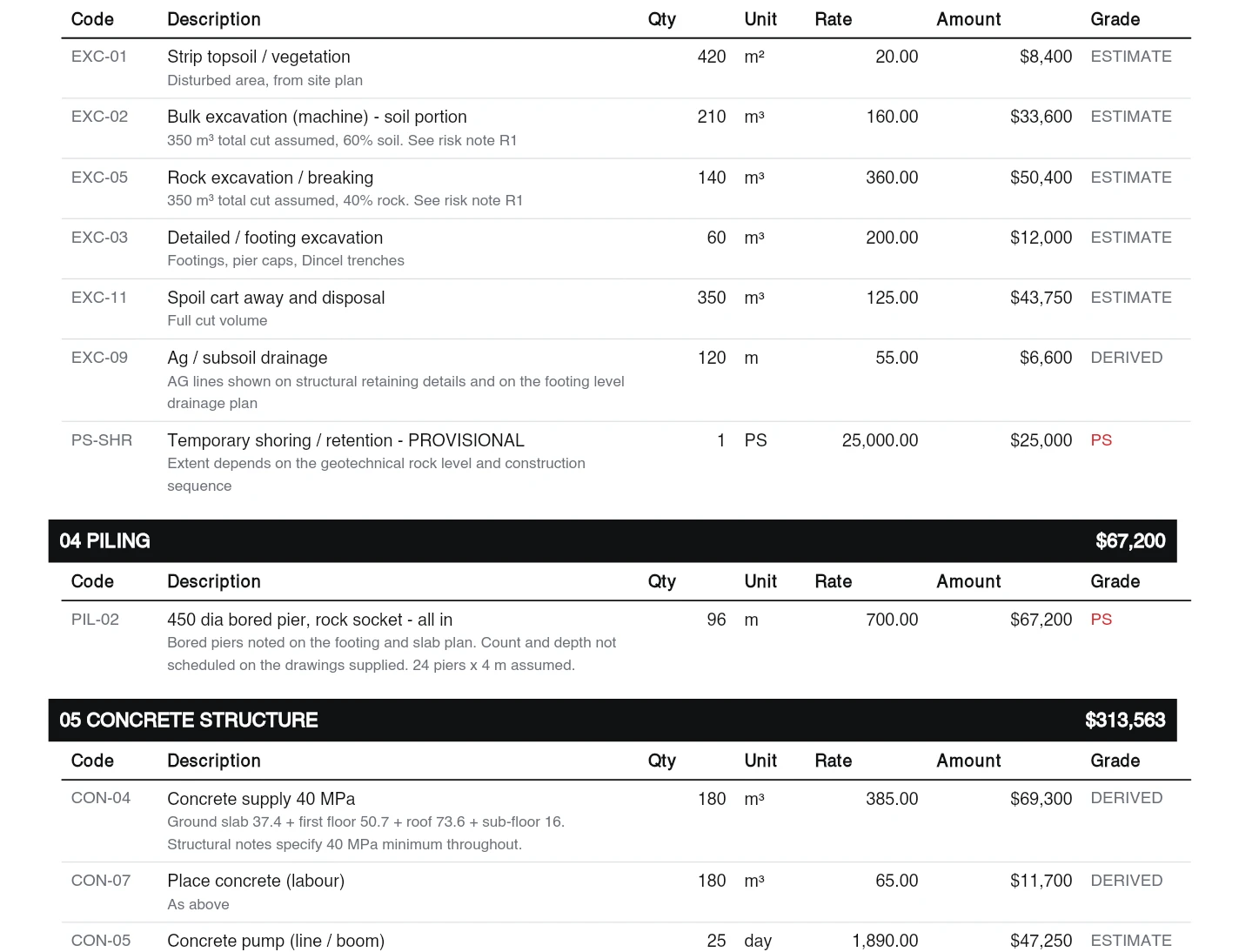
Editable Excel bill of quantities
Trade by trade. Every line with its quantity, its unit, the drawing it came from and a confidence grade.
We measure, we price, you confirm the rates. Every line is already priced, so the workbook opens with a total on it. A Your Rate column sits beside ours — change anything you would price differently and every subtotal and total updates on the spot.
Seven tabs: the measured quantities in plain English, the bill of quantities, the cost summary, the drawing register, the findings, the scope questions and the programme.
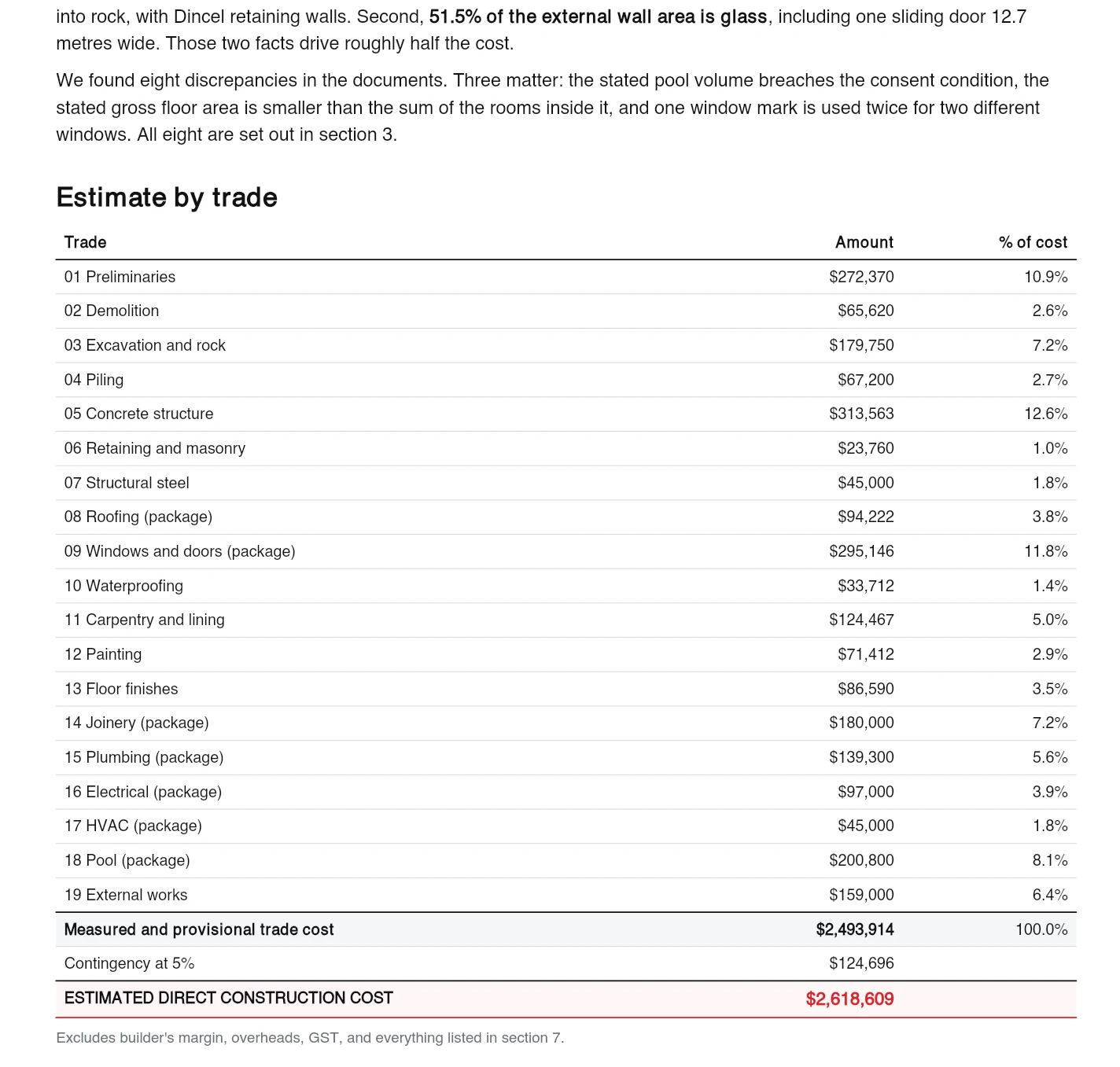
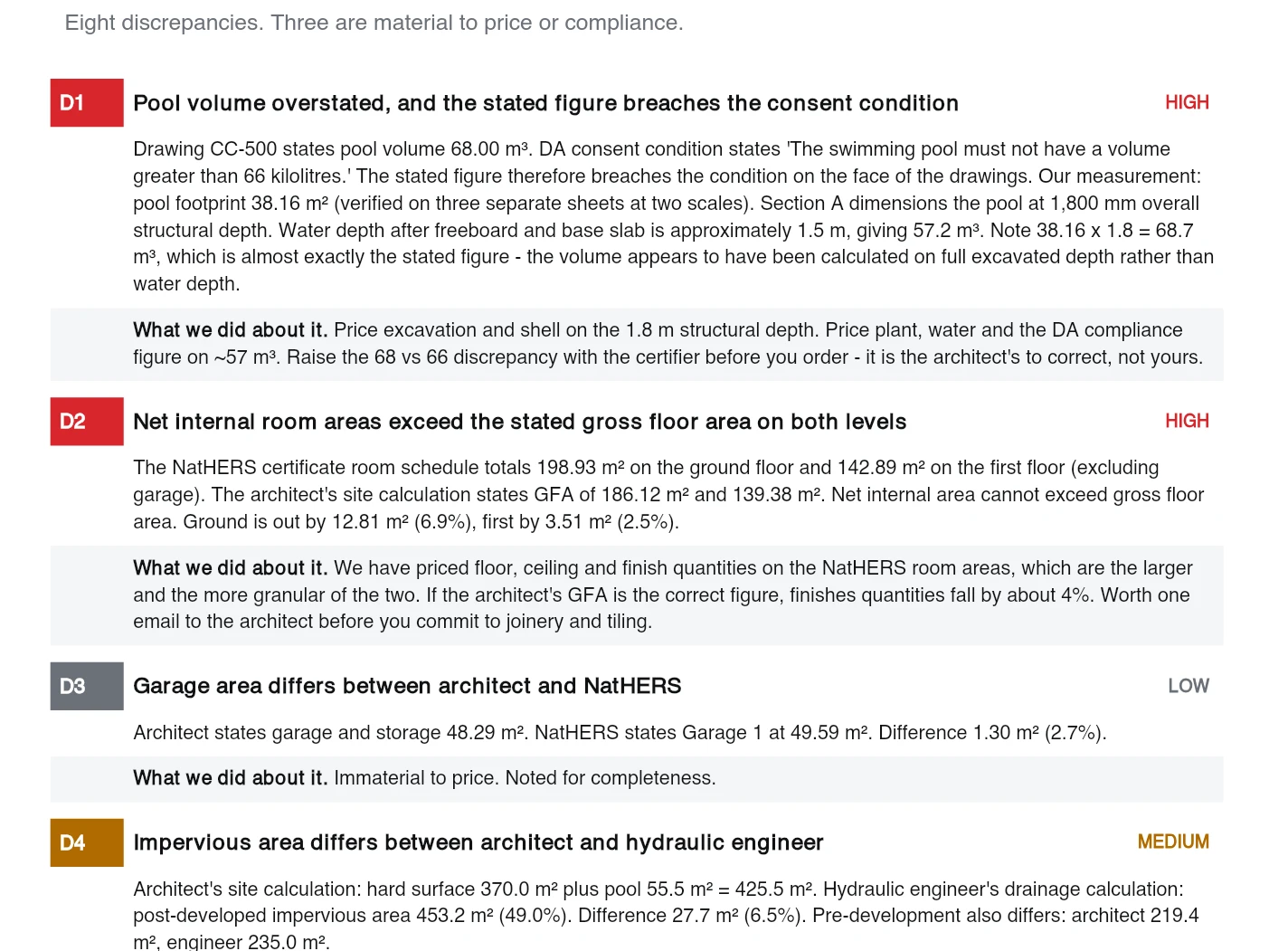
Estimate and take-off report
What we measured, how we proved the drawings were to scale, everything that did not line up, the checks we ran, the risks ranked, with what each one is worth, and the basis and exclusions in writing.
Quote sheets for your subbies
One per package trade, carrying the scope, the measured quantities, what to include and exclude, and a blank price box.
None of your costs appear on them. Each one names the documents that trade needs, so you forward the sheet with the right drawings and every quote comes back on the same basis.
Assumptions, exclusions, site conditions
Every assumption written down, every exclusion listed, every allowance flagged as an allowance. Plus the site conditions that move the price — rock, access, scaffold — flagged wherever the documents raise them, so preliminaries are sized for the block you actually have.
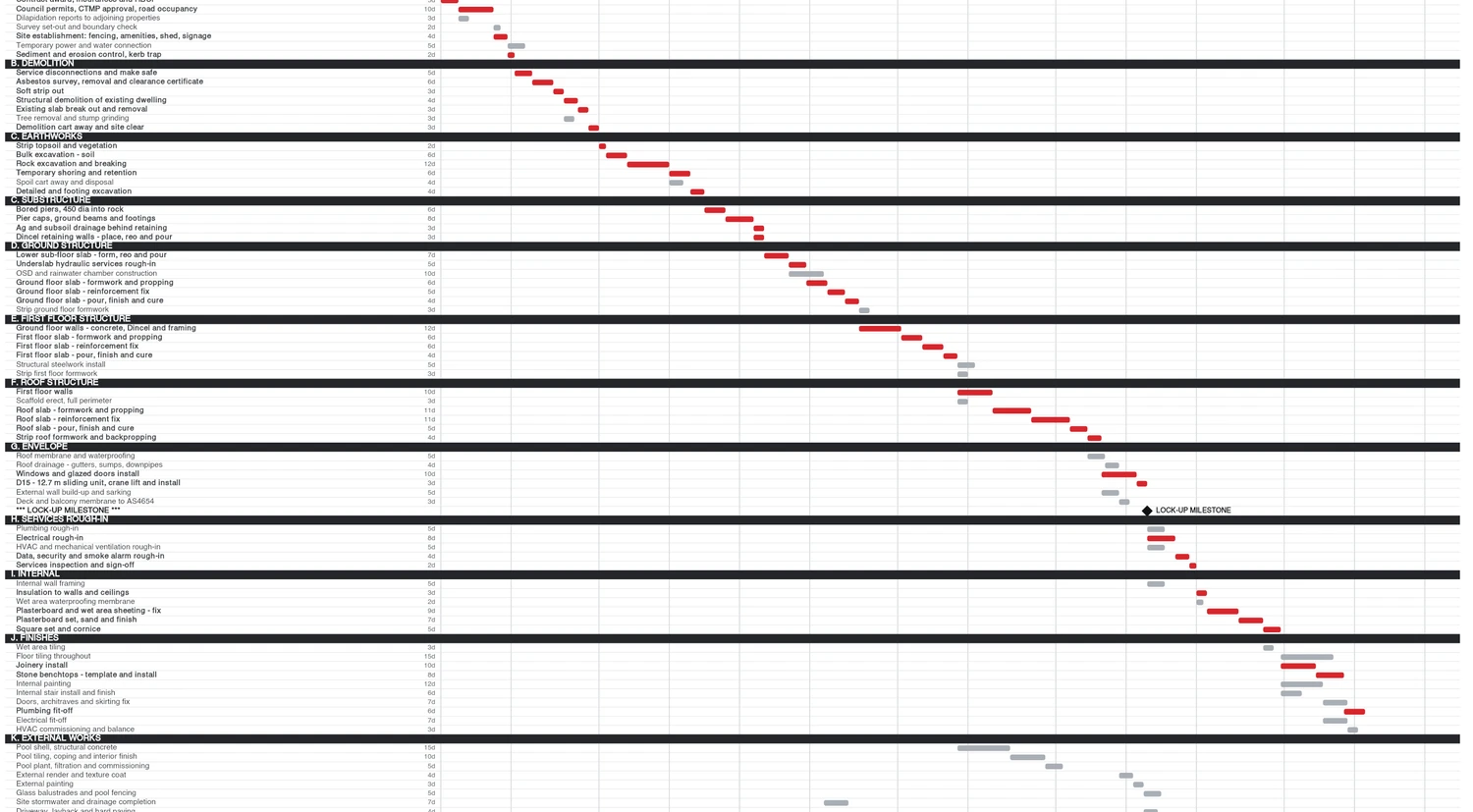
A programme, not a percentage.
Cost and time are the same problem. Preliminaries scale with programme, not floor area, and labour is the biggest variable in both.
Your measured quantities become a trade-by-trade programme with the critical path marked, so the preliminaries and labour in your estimate come from a real duration instead of a rule of thumb. The production rates behind the durations are printed beside them, so you can see what each duration rests on.
Indicative only. It is an estimating programme, not a construction programme and not a contract document. The quantities are measured; the production rates behind the durations are our judgement, drawn from experience rather than site records. Do not set contractual dates or liquidated damages from it.
Not ready to send a whole set? Send one drawing.
Send or call about a single sheet from a job you have already priced, and we will measure it and tell you straight how our number compares to yours. No charge, no obligation — and you will learn more from that than from anything on this page.